
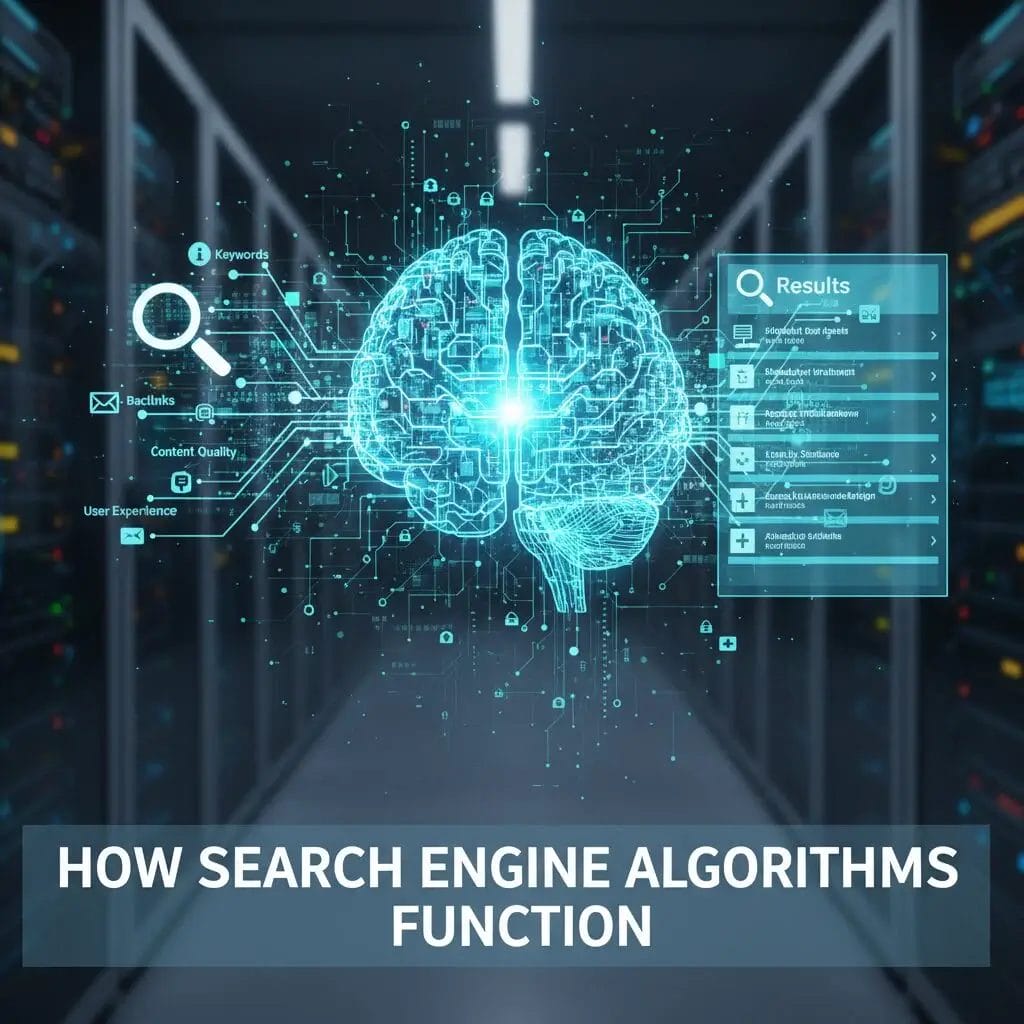
Search Engine Optimisation (SEO) systematically improves a website’s organic visibility within search engine result pages (SERPs) to attract qualified traffic without direct advertising costs. By aligning website architecture and content with algorithmic ranking signals, businesses increase their likelihood of appearing for relevant user queries. Artificial intelligence (AI) increasingly influences these rankings, requiring marketers to adapt their strategies for both traditional algorithms and machine learning models like RankBrain.
The Core Components of SEO
Understanding the mechanisms behind search visibility enables you to construct a strategy that drives revenue. SEO creates a sustainable pipeline of visitors by optimising digital assets to meet the technical and content standards of search engines like Google and Bing. Unlike paid advertising, which ceases to provide value the moment budget is withdrawn, SEO focuses on acquiring traffic from organic search results through cumulative improvements to site authority and relevance.
Rand Fishkin, the co-founder of Moz, visualised the prioritisation of these tasks using a framework inspired by Maslow’s Hierarchy of Needs. This model, known as Mozlow’s Hierarchy of SEO Needs, dictates that foundational technical requirements must be met before advanced optimisations can succeed. You can study the original concept of Mozlow’s Hierarchy of SEO Needs to understand why crawl accessibility must precede keyword research.
Top Tip: Modern SEO extends beyond traditional web search. Users increasingly rely on alternative platforms to find information, meaning you must also optimise video content for YouTube and treat social platforms like TikTok as vertical search engines.
What are the three pillars of SEO?
Marketingfirst.co.uk/wp-content/uploads/2025/12/What-Is-SEO-and-How-Does-it-Work-1.webp” alt=”What are the three pillars of SEO?” />
Digital marketers must master three distinct operational areas to secure high rankings. A strategy requires the simultaneous execution of technical, on-page, and off-page initiatives. For a deeper analysis of these categories, you can read a comprehensive breakdown of the three pillars of SEO which details how they interact.
Technical Optimisation
Technical SEO addresses the non-content elements of your website to ensure search engine spiders can crawl and index your pages effectively. This foundational pillar involves improving site architecture, page speed, mobile usability, and XML sitemaps. Without a technically sound infrastructure, search engines cannot assess the value of your content.
On-Page Optimisation
On-page SEO focuses on the content users see and the HTML source code behind it. This process ensures your pages satisfy user intent and clearly communicate relevance to search algorithms. Key activities include optimising title tags, internal linking, and creating helpful content that targets specific keywords. You can implement these changes via Content Management Systems (CMS) such as WordPress, Shopify, or Magento.
Off-Page Optimisation
Off-page SEO builds your website’s authority and reputation through external signals. The primary driver here is acquiring high-quality backlinks from reputable websites, which serve as votes of confidence for your content. For additional context on how these elements function, you might review how the three pillars of SEO strategy work together to support domain authority.
Paid search vs. organic search – the differences and similarities
Distinguishing between organic listings and paid advertisements is fundamental to allocating marketing budgets effectively. While both channels appear on the same results page, they operate on entirely Different economic models. You can explore more about the differences between paid and organic search results to understand how they complement one another.
Visual and Structural Differences
Paid search results (PPC) occupy the premium slots at the absolute top of the SERP, pushing organic results further down the page. This positioning grants paid ads immediate visibility, often marked with “Sponsored” labels. However, modern interfaces are shifting; Google AI Overviews influence search result layouts by synthesising answers directly at the top of the page, pushing traditional links further down. This evolution means content must now compete for visibility within AI-generated snapshots as well as standard rankings.
Cost Structures: CPC vs Resource Investment
Paid search operates on a pay-per-click (PPC) model where advertisers incur a fee for every user interaction. This model forces businesses to buy traffic continuously; when the budget halts, the visibility disappears. Conversely, organic search requires an upfront resource allocation rather than direct media spend. Although organic traffic is technically free, the investment lies in creating high-quality content and technical optimisation to earn the ranking.
ROI Measurement and Traffic Share
Paid search offers precise return on investment (ROI) tracking through granular keyword data. However, paid ROI often plateaus because costs rise with competition. Organic search is more complex to measure initially, but it frequently delivers superior long-term returns. Data consistently shows that Organic search drives over fifty per cent of web traffic, dwarfing the share of paid ads.
Core Similarities
Despite their differences, paid and organic search share fundamental mechanics:
- Keyword Research: Both channels require identifying the specific terms users type into search bars.
- Landing Pages: Effective campaigns rely on high-quality destination pages.
- User Intent: Both methods target users actively seeking solutions.
How Search Engine Algorithms Function
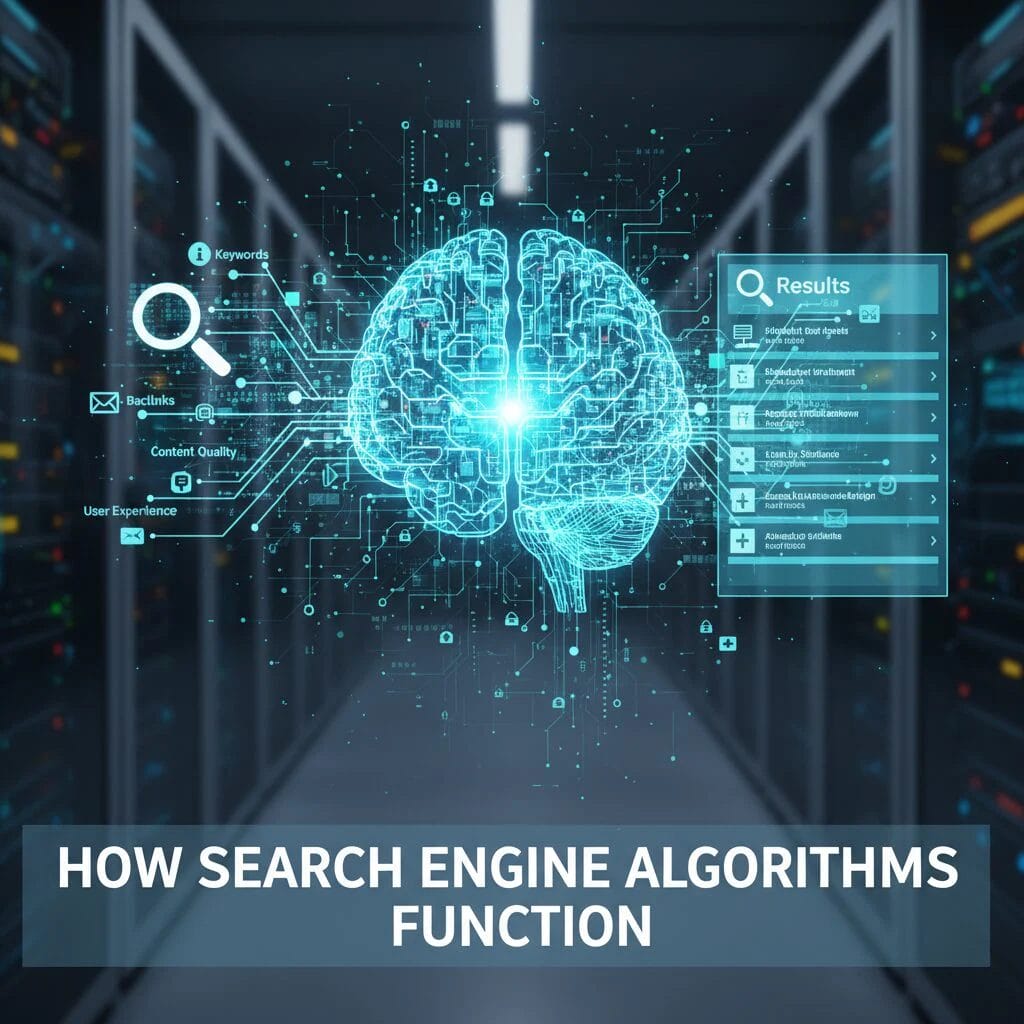
Algorithms determine rankings based on specific signals to match queries with the most relevant documents. These complex computer programmes evaluate content quality, authority, and user experience to order the results. Marketers must monitor updates, as changes to these algorithms-or the impact of AI on organic click-through rates-can significantly alter brand visibility.
Step 1: The Crawling Process
The first stage of search engine operation is crawling. Crawlers systematically browse the web to discover content and map the internet’s structure. These automated bots (such as Googlebot) follow hyperlinks from known pages to find new URLs. Google Search Central explains how crawling discovers URLs by periodically revisiting pages to detect updates. If an external site links to your blog, the bot follows that path during its crawl of the external source, subsequently locating and scanning your new content.
Step 2: Search Engine Indexing
Indexing constitutes the analysis and storage phase, where search engines organise data for rapid retrieval. Only pages that provide unique value and meet technical standards are added to this massive library.
A page might be excluded from the index if:
- The content is identified as duplicate or substantially similar to existing pages.
- The material is deemed low-quality, thin, or spammy.
- Technical blocks prevent the crawler from accessing the content.
- The domain lacks sufficient inbound links to verify its existence.
Step 3: Search Engine Ranking
Ranking represents the final stage where algorithms order results based on relevance. These calculations rely on over 200 distinct signals including:
- Keyword Placement: The presence of the target term or its synonyms in the title tag and main body.
- Page Velocity: The speed at which a page loads and its responsiveness on mobile devices.
- Domain Authority: The perceived reputation of the website within its specific industry or topic.
- Backlink Profile: The volume and trustworthiness of external sites linking to the page.
- Content Relevance: The degree to which the information answers the specific intent of the searcher.
- Mobile Optimisation: The usability and visual stability of the page on smartphones and tablets.
How Google Orders and Ranks Search Results
Google employs a sophisticated network of algorithms, including Hummingbird, Panda, and RankBrain, to interpret queries and sort results. These systems work in unison to understand the nuance of human language rather than simply matching keywords.
Understanding RankBrain
The machine learning component known as RankBrain processes queries by interpreting unfamiliar words through word vectors and analysing underlying search intent. To optimise for this:
- Target Medium-Tail Phrases: Xpert. Digital’s recent guide on RankBrain optimisation confirms that 2-3 word phrases often balance search volume with clear intent.
- Adopt Natural Language: Write exactly how your audience speaks. Conversational tones rank better than rigid, keyword-stuffed sentences.
- Maximise Click-Through Rates (CTR): The Digital Marketing Institute explains that improving your position directly correlates with crafting compelling titles that encourage users to visit your site over competitors.
- Increase Dwell Time: Reduce bounce rates by satisfying the user’s curiosity immediately.
Beyond basic ranking signals, content creators must align with the search quality evaluator guidelines regarding E-E-A-T-Experience, Expertise, Authoritativeness, and Trustworthiness. Future-facing strategies should also account for the multitask unified model designed for complex queries (MUM), which analyses video, images, and text simultaneously.
What Is an Effective SEO Strategy?

Executing random tactics without a roadmap leads to wasted budget. Search Atlas defines an SEO strategy as a comprehensive roadmap that outlines timelines and methodologies for improving search rankings.
Top Tip: Local visibility remains a powerhouse for regional growth. Broadly reports that local SEO is essential because 46% of all Google searches now have local intent. Optimising for “near me” queries connects you directly with these high-intent customers.
How to Set Objectives
Defining clear targets is the foundation of any successful campaign.
- Secure Stakeholder Buy-in: Demonstrating potential ROI helps key decision-makers approve necessary budgets.
- Guide Strategic Planning: quantified goals dictate which tactics take priority.
- Guarantee Accountability: Specific benchmarks allow you to track progress.
3 Examples of SEO Objectives
Setting SMART SEO goals ensures measurable and achievable marketing outcomes for any campaign maturity level.
- Keyword Ranking: Position 50% of high-value keywords on the first page of Google within nine months.
- Traffic Growth: Increase year-on-year organic sessions by 20% in Q3 and 25% in Q4.
- Market Share: Expand SEO market share from 3% to 5% during the next fiscal year.
Key Metrics for SEO Performance
Tracking the right data points reveals if you are on the right path. Backlinko lists the most important SEO metrics to track, emphasising that modern measurement must go beyond simple rankings.
Search Queries (Keywords)
Users express specific intent through text or voice input known as search queries. Monitoring ranking positions for these terms reveals content visibility within the target market. This Top of the Funnel (TOFU) metric identifies initial audience reach.
Organic Traffic
Unpaid visitors arriving from search engines constitute organic traffic. High organic traffic volume indicates effective SEO strategy implementation and confirms technical health.
SERP Visibility
Search Engine Results Page (SERP) rankings determine the precise placement of a URL for specific queries. Superior rankings directly correlate with increased impressions and click potential.
Dwell Time
The duration a user spends on a specific URL indicates the relevance and quality of the content. Extended dwell time suggests the material satisfies the user’s search intent.
Engagement Rate
Modern Analytics platforms track interactions such as scrolls, clicks, and shares to calculate engagement rate. Engagement metrics signal how users interact with your website content, replacing outdated metrics like bounce rate.
Click-Through Rate (CTR)
The ratio of users who click a link relative to total impressions defines the CTR. Optimising meta titles and descriptions improves this figure.
Leads and Revenue
Attributing specific financial outcomes to organic search activity proves return on investment (ROI). Tracking organic conversions connects search efforts directly to business revenue and validates the bottom line.
Domain Authority
Predictive algorithms assign a score to a website’s ranking potential based on the strength of its backlink profile. Improving this score often correlates with better performance across all queries.
Essential SEO Tools and Software

Success in search marketing requires precise data analysis and automation through specialised software.
Performance Tracking and Analytics
- Google Search Console: Monitors indexing status and organic search performance directly from Google.
- Google Analytics 4 (GA4): Tracks user behaviour and conversion metrics across websites and apps.
- Semrush: Offers comprehensive competitor analysis and rank tracking.
- Ahrefs: Provides extensive backlink data and keyword gap analysis.
Technical Auditing and Crawling
- Screaming Frog: Crawls websites to identify broken links, redirect chains, and missing metadata.
- SEOptimer: Delivers quick, actionable audits for smaller websites.
- Moz Pro: Analyzes domain authority and technical site health.
Keyword Research and Content Strategy
- Google Keyword Planner: Generates keyword ideas based on Google Ads data.
- AnswerThePublic: Visualizes search questions and autocomplete data.
- UberSuggest: Estimates traffic volume and keyword difficulty.
AI-Powered Optimization
- seoClarity: Enterprise-level platform for predictive analysis and content management.
- Surfer: Correlates on-page signals with top-ranking pages to guide content structure.
AI and the Future of Search
Artificial intelligence has shifted search engines from information retrieval systems to answer engines.
Google AI Overviews
Google now synthesises information from multiple sources to display direct answers at the top of search results. This feature rewards deep expertise. Marketers must optimise content to be cited as a source within these AI-generated summaries that dominate the top of the search results page.
Answer Engine Optimisation (AEO)
Users increasingly seek direct answers from LLMs like ChatGPT and Perplexity. A successful strategy involves optimising content to appear in direct answers provided by AI agents.
Core Web Vitals (CWV)
User experience metrics directly influence ranking capabilities. Google measures three specific signals: Largest Contentful Paint (LCP) for load speed, Cumulative Layout Shift (CLS) for visual stability, and Interaction to Next Paint (INP) for responsiveness. Developers must optimise these specific metrics to meet Google’s performance standards.
Building a Career as an SEO Specialist

Proficiency in Search Engine Optimisation offers a distinct pathway to employment in the digital sector. Recent industry data confirms this trend, as 91% of marketers reported that SEO positively impacted website performance and overall marketing goals in 2024.
Mandatory SEO Competencies
Success in this field requires a fusion of analytical, technical, and creative capabilities:
- Keyword Strategy: You must identify high-value search queries that align with user intent and identify entity-based queries and long-tail searches.
- Link Acquisition: You will architect internal linking structures and secure high-quality external backlinks.
- Content Architecture: You will develop content pillars and optimise existing pages to maintain visibility as algorithms shift.
- Technical Auditing: You will audit site architecture, page speed, and schema markup to remove barriers that prevent search bots from accessing your content.
My Answers to your Questions
How does Google find my content?
Google uses automated software called crawlers to explore the web, follow links, and store data about your pages in its massive index. You can learn more about this process in the official guide on how Google Search works directly from their developers.
Is SEO better than Paid search?
Neither is universally better; they serve different goals. Organic search delivers a higher long-term return on investment (ROI) and builds brand equity, while paid search provides instant traffic and precise targeting.
Why are backlinks important?
Search engines view backlinks as endorsements. A link from a high-authority site signals to Google that your content is trustworthy, which significantly boosts your ranking potential.
What is the most essential part of SEO?
While all three stages are necessary, the official guide to Google’s search ranking systems suggests that high-quality content that matches user intent is the primary driver of visibility.
How do I get my page indexed faster?
You can accelerate this process by submitting your URL directly to Google Search Console and acquiring links from high-authority, already-indexed pages.
Does social media affect SEO ranking?
Social media is not a direct ranking signal, but it increases visibility and traffic, which can lead to the acquisition of backlinks that do influence rank.

Meet the UK’s Digital Storyteller: Journalist & SEO Developer
Did you know that websites with well-optimised SEO receive approximately 1,000% more traffic than those without proper optimisation? This striking statistic shows why having someone who understands both compelling content creation and technical SEO is so valuable.
I blend journalism and web development to create digital experiences that connect with people and rank well on search engines. After years of writing for leading UK publications, I noticed how technical limitations often held back great content from reaching its audience. So I taught myself web development, specializing in SEO-focused sites that don’t just look good but actually get found. When I’m not coding or writing, you’ll find me exploring London’s hidden coffee shops with my dog, testing new ideas on my personal blog, or speaking at industry events about the intersection of content and code.
Need someone who speaks both “journalist” and “developer” fluently? Let’s talk about how we can make your digital presence more visible and valuable.
