
Defining the Ecosystem of Pay-Per-Click (PPC) Advertising
Extending the Definition of PPC Beyond Social Platforms
Pay-Per-Click advertising is a model in which advertisers pay a fee only when a user interacts with their ad. While social media platforms use this model, the broader non-social PPC environment encompasses search engines, display networks, and retail platforms. This distinction is necessary because user intent differs significantly: search engine users actively seek solutions, whereas social media users consume content passively. A strong strategy targets these high-intent moments across the open web, utilising text, display, and shopping formats to capture demand at the precise moment of interest.
Distinguishing Organic Search (SEO) from Paid Search (SEM)
The fundamental difference lies in the acquisition method and cost structure. Organic Search (SEO) earns traffic through unpaid, algorithm-driven rankings based on content quality and authority, requiring long-term investment. Paid Search (SEM) acquires traffic by purchasing visibility in sponsored slots, offering immediate results and precise control over targeting. While SEO builds sustainable asset value over time, SEM provides the agility to test keywords and scale traffic instantly, making them complementary forces in a complete search marketing plan.
Identifying Primary Stakeholders in the PPC Auction Model
Three core entities interact within the PPC auction mechanism. Advertisers create campaigns and bid on keywords to promote their products. Publishers (search engines and website owners) provide the inventory or space where ads appear. Networks facilitate the transaction, using algorithms to match advertiser bids with available publisher space. This tripartite relationship guarantees that ads remain relevant to users while maximizing revenue for publishers and return on investment for advertisers.
Dominating the Non-Social PPC Sector with Google, Microsoft, and Amazon
Three major platforms control the majority of non-social PPC inventory. Google Ads commands the largest share, capturing high-intent search traffic and vast display reach. Google owns approximately 39% of the digital advertising market revenue, making it the primary driver for most campaigns. Microsoft Advertising serves a unique audience, often older and more affluent, across Bing, Yahoo, and AOL. Amazon Ads has emerged as a retail giant, allowing brands to bid on product visibility directly at the point of purchase. Understanding the foundational environment allows for a deeper examination of the mechanical processes governing ad delivery.
Functioning of the PPC Auction and Bidding Mechanism

Algorithms Determining Ad Rank on Search Engine Results Pages
Ad Rank determines an advertisement’s position on the results page. Search engines calculate this value in real-time using a combination of the maximum bid and the ad’s Quality Score. The algorithm weighs the bid amount against the ad’s relevance to the user’s query. A higher bid does not guarantee the top spot; an ad with superior relevance and expected performance can outperform a higher bidder, rewarding advertisers who prioritise user experience over raw spending power.
Quality Score Influence on Actual Cost-Per-Click
The Quality Score acts as a gatekeeper for efficiency, directly affecting the price an advertiser pays. Platforms incentivise high-quality ads by discounting the Cost-Per-Click (CPC) for relevant, well-performing creatives. A high Quality Score lowers the minimum bid required to enter the auction. Conversely, low-quality ads face financial penalties in the form of higher CPCs, forcing advertisers to improve their relevance or risk exhausting their budgets with minimal return.
Components of Quality Score: CTR, Relevance, and Experience
Three distinct factors comprise the Quality Score metric. Expected Click-Through Rate (CTR) predicts the likelihood of a user clicking the ad based on historical performance. Ad Relevance measures how closely the ad copy matches the user’s search intent. Landing Page Experience evaluates the destination URL’s speed, mobile-friendliness, and content relevance. Improving these three elements creates a virtuous cycle of lower costs and higher ad positions.
Landing Page Optimisation as a Quality Score Driver
Google evaluates your landing page experience as a primary component of Quality Score, directly influencing your Cost Per Click (CPC) and Ad Rank. A high-performing landing page must deliver immediate relevance, rapid load times, and a fluid mobile experience to satisfy the user’s search intent. Recent audits show that mobile optimisation plays a significant role in quality assessment, as a mere one-second delay in load time reduced mobile conversions by 20%. Refining Core Web Vitals, specifically Interaction to Next Paint (INP), allows users to interact with your content without frustration. You must align your headline and offer directly with the ad copy to reinforce the “ad promise,” which signals transparency to Google’s algorithms. Prioritizing the repair of pages rated “Below Average” often yields the highest return on effort.
Protecting Budgets via the Second-Price Auction Model
In a second-price auction, the winner does not pay their full maximum bid. Instead, they pay only one cent more than the amount bid by the second-highest competitor (or the minimum threshold to beat them). This mechanism encourages advertisers to bid their true maximum willingness to pay without fear of overspending. It secures the advertiser’s budget by aligning the final cost with the market’s competitive floor rather than their own theoretical ceiling. Once the auction dynamics are understood, advertisers must master the selection of triggers that enter them into these auctions.
Structuring Keyword Strategies and Match Types
Intent Hierarchy: Transactional, Informational, and Navigational
Keywords fall into three distinct intent categories that dictate conversion probability. Transactional keywords indicate a readiness to buy (e.g., “buy running shoes”), offering the highest ROI. Informational keywords signal research (e.g., “best running shoes”), useful for building awareness but often yielding lower immediate conversion rates. Navigational keywords target users looking for a specific site (e.g., “Nike website”). A balanced strategy prioritises transactional terms while using informational queries to feed the top of the funnel.
Controlling Query Matching with Keyword Match Types
Match types define how closely a user’s search must align with the advertiser’s keyword. Exact Match targets precise queries, offering the highest relevance and control. Phrase Match allows for additional words before or after the keyword, balancing reach and precision. Broad Match casts the widest net, triggering ads for synonyms and related concepts. Current strategies favour pairing Broad Match with Smart Bidding to capture high-value traffic that strict matching might miss.
Minimising Wasted Spend with Negative Keywords
Negative keywords prevent ads from showing for irrelevant searches, acting as a filter for budget protection. By explicitly excluding terms (e.g., “free,” “jobs,” “repair”), advertisers verify that their spend focuses solely on qualified traffic. Regular analysis of search term reports identifies these wasteful queries. Adding them to a negative keyword list creates a cleaner, more efficient campaign by eliminating clicks that have zero probability of converting.
Semantic Search Impact on Broad Match Methodology
Modern search engines utilize semantic understanding to interpret the meaning behind a query rather than just matching characters. This shift allows Broad Match to identify relevant traffic based on context and intent. Algorithms now associate “running shoes” with “athletic footwear” automatically. Advertisers must trust machine learning to find these semantic connections, moving away from exhaustive keyword lists toward theme-based targeting that capitalises on the engine’s understanding of language. Selecting the right keywords is only effective if the visual or textual creative matches the user’s intent.
Driving Performance with Ad Formats and Campaign Types

Constructing Responsive Search Ads (RSAs)
Responsive Search Ads adapt automatically to show the best message to each user. Advertisers provide multiple headlines and descriptions, and the platform mixes and matches them. The system tests these combinations to identify the highest-performing version for a specific query. This dynamic assembly increases the likelihood of a click by tailoring the ad copy to the user’s specific context and preference at the moment of search.
Functionality of Performance Max (PMax) Campaigns
Performance Max uses a single campaign to access all of Google’s inventory, including Search, Display, YouTube, and Discover. It utilises automation to distribute budget dynamically across these channels based on real-time performance data. Current reports indicate that performance depends heavily on the volume and diversity of creative assets fed into the system. Success with PMax requires supplying high-quality images, videos, and text, allowing the AI to construct the best ad format for any given placement.
Utilizing Merchant Feeds in Google Shopping and PLAs
Product Listing Ads (PLAs) rely on a structured data feed from the merchant’s inventory rather than keywords. This feed contains product details like title, price, image, and SKU. Google Shopping algorithms scan this data to match products with relevant search queries. Maintaining an accurate, updated feed is mandatory; missing data points or low-quality images can prevent products from appearing in these highly visual, conversion-oriented ad slots.
Local Services Ads (LSA) vs. Traditional PPC
Local Services Ads (LSA) operate on a pay-per-lead model, fundamentally different from the pay-per-click mechanics of traditional search advertising. These ads appear at the very top of search results and feature the Google Guarantee badge, which builds immediate trust with users seeking vetted service providers. Local trades should prioritise LSA badges; they establish credibility faster than text ad copy.
| Feature | Local Services Ads (LSA) | Traditional PPC (Google Ads) |
|---|---|---|
| Cost Model | Pay-per-lead (calls/messages) | Pay-per-click (traffic) |
| Placement | Top of SERP (above text ads) | Above/Below Organic Results |
| Ranking Factors | Proximity, Reviews, Response Rate | Bid, Quality Score, Ad Rank |
| Asset Control | Automated (Profile info) | Granular (Keywords, Copy) |
Local Services Ads operate on a pay-per-lead model, meaning you only pay when a qualified lead contacts your business directly. Conversely, traditional PPC offers scalable reach and precise keyword targeting, making it ideal for capturing volume or targeting specific niche services that LSAs may not cover.
Display Advertising within Google and Microsoft Networks
Display advertising targets users passively as they browse websites, watch videos, or check email. The Google Display Network (GDN) covers millions of sites, while the Microsoft Audience Network integrates native ads into high-quality placements like MSN and Outlook. These formats build brand awareness and retarget users who previously visited a site. Microsoft Advertising offers a lower average Cost-Per-Click compared to Google, making it a cost-effective channel for extending reach beyond the primary search results. Diverse ad formats require sophisticated targeting capabilities to ensure they reach the correct non-social audience.
Achieving Audience Targeting Without Social Graphs
Contextual Targeting Using Page Content and Keywords
Contextual targeting places ads on websites that match specific keywords or topics relevant to the product. Instead of tracking the user’s history, the system analyses the content of the webpage itself. If a user reads a blog about marathon training, the system serves ads for running gear. This method respects user privacy while maintaining high relevance, connecting the ad to the immediate interest of the reader.
Functions of In-Market and Affinity Audiences
Platforms categorise users based on their browsing behaviour to predict their interests.In-Market Audiences identify users actively researching or comparing products, signalling high purchase intent. Affinity Audiences group users based on long-term habits and lifestyles (e.g., “Technophiles” or “Travel Buffs”). Utilising these pre-defined segments allows advertisers to focus spending on groups most likely to engage, even without specific keyword triggers.
Enhancing Precision with First-Party Data and Customer Match
First-party data consists of information collected directly from customers, such as email lists and purchase history. Advertisers upload this data to platforms via Customer Match to target existing customers or find new users with similar profiles. As privacy regulations tighten, this owned data becomes the most reliable asset for precise targeting. It allows for personalised messaging and higher conversion rates by re-engaging users who have already demonstrated an interest in the brand.
Remarketing Mechanisms for Previous Site Visitors
Remarketing Lists for Search Ads (RLSA) and standard display remarketing target users who have previously visited the advertiser’s website. By placing a tracking pixel on the site, advertisers can serve tailored ads to these visitors as they browse other parts of the web. This strategy reinforces brand recall and encourages return visits to complete a purchase, often delivering the highest conversion rates of any targeting method. Precise targeting necessitates an economic strategy to ensure profitability per acquisition.
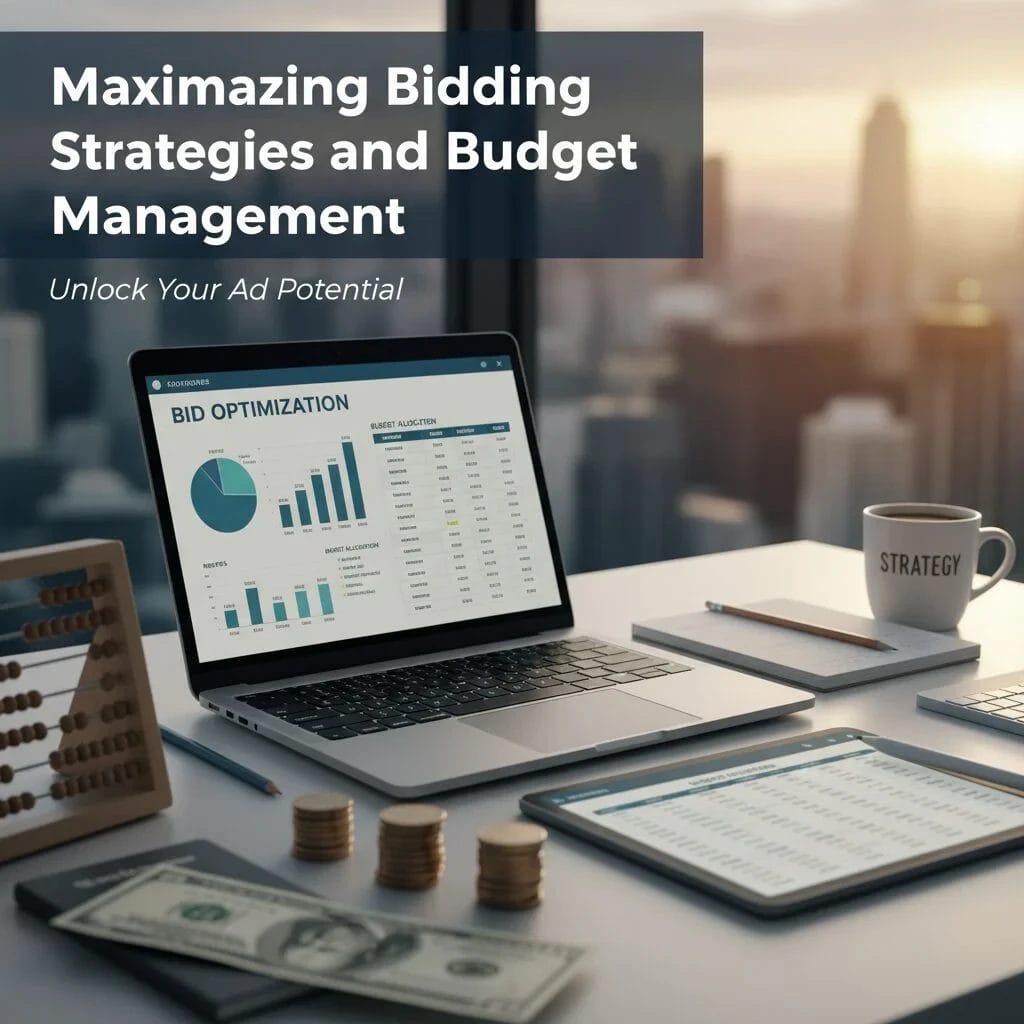
Maximising Bidding Strategies and Budget Management
Distinguishing Manual CPC from Automated Smart Bidding
Manual CPC gives the advertiser complete control to set the maximum bid for individual keywords. In contrast, Smart Bidding utilizes machine learning to adjust bids in real-time for every auction. Smart Bidding analyzes millions of signals-device, location, time of day-to predict the likelihood of a conversion. While manual bidding offers control, industry professionals use AI tools while maintaining strategic oversight to achieve scale and efficiency that human management cannot replicate.
Machine Learning in Target CPA and Target ROAS
Target CPA (Cost-Per-Acquisition) sets bids to get as many conversions as possible at a specific cost. Target ROAS (Return on Ad Spend) focuses on revenue, adjusting bids to maximise the value of conversions relative to the spend. Both strategies rely on historical data to predict outcomes. The algorithm raises bids for users with high predicted conversion value and lowers them for low-probability clicks, automating the path to profitability.
Detecting and Preventing Click Fraud
Budget allocation means nothing if the traffic is fake. Click fraud drains budgets by generating invalid traffic (IVT) through malicious bots and competitor clicks. Modern protection strategies rely on detection mechanisms that analyse behavioural signals, such as mouse movements and scroll depth, to distinguish human users from automated scripts. Advanced fraudsters now deploy AI to mimic human behavior, meaning click fraud trends for 2025 reveal a rise in AI-powered bots that can bypass simple IP exclusions. To combat this, advertisers must implement multi-layered defence systems, including device fingerprinting and real-time IP blocking. Legal sector clients, for instance, have lost significant ad spend to bot farms before integrating third-party protection tools. These platforms automatically add suspicious IPs to exclusion lists, confirming that budget funds actual potential customers rather than fraudulent interactions.
Preferring Maximise Clicks Over Conversion-Based Bidding
Maximise Clicks is the ideal strategy when the primary goal is traffic volume rather than specific actions. It directs the system to spend the daily budget to acquire the highest possible number of visitors. This approach works best for new campaigns lacking historical conversion data or for brand awareness initiatives where site visibility takes precedence over immediate sales. Once sufficient data accumulates, advertisers typically move to conversion-based strategies.
Seasonality Adjustment Effects on Budget Pacing
Seasonality adjustments inform the bidding algorithm of anticipated changes in conversion rates driven by external events (e.g., Black Friday). Without this input, the system might misinterpret a sudden spike in traffic as an anomaly or fail to bid aggressively enough during peak periods. Advertisers apply these adjustments to temporarily increase bid limits, guaranteeing they capture the surge in demand before returning to normal operations. Implementing a bidding strategy requires detailed data to verify its success through precise metrics.
Measuring Success with Metrics and KPIs
Calculating Conversion Rate (CVR) and Return on Ad Spend (ROAS)
Conversion Rate (CVR) measures the percentage of clicks that result in a desired action, calculated by dividing conversions by total clicks. It indicates the effectiveness of the landing page and offer. Return on Ad Spend (ROAS) is a financial performance metric calculated by dividing total revenue by total ad cost. These two metrics serve as the primary barometer for campaign health, guiding decisions on where to increase or decrease investment.
Integrating Google Analytics 4 (GA4) with Google Ads
Integrating Google Analytics 4 (GA4) with Google Ads enables Data-Driven Attribution (DDA), which assigns credit to conversion paths based on actual user data rather than arbitrary rules. This integration allows you to import “key events” (formerly conversions) directly into Google Ads to train Smart Bidding algorithms with granular performance data. Data-driven attribution in GA4 distributes credit based on actual conversion data, revealing the true value of upper-funnel keywords that assist in conversions but don’t capture the final click. By linking these platforms, you gain a complete view of the customer journey across devices and channels. This connection enables the creation of highly specific audiences in GA4-such as users who added items to a cart but abandoned them-and retargets them specifically within Google Ads. This data flow creates a feedback loop that continuously refines bidding strategy for higher ROI.
Indicating Market Penetration with Impression Share
Impression Share represents the percentage of times an ad appeared compared to the total number of times it could have appeared. A low impression share indicates missed opportunities due to low bids or insufficient budget. Monitoring this metric reveals the potential for growth within the current market. Increasing Impression Share typically requires improving Quality Score or raising budgets to capture a larger slice of the available demand.
Competitor Intelligence and Analysis
Competitor intelligence tools allow you to reverse-engineer rival strategies by revealing their high-performing keywords, ad copy history, and estimated budgets. Gaining this visibility helps identify keyword gaps-terms competitors rank for that you do not-and capitalize on their missing opportunities. Semrush is the best PPC tool if competitor intelligence is a priority, offering detailed data on competitor bidding strategies and display ad creatives. Tools like SpyFu and Ahrefs also provide deep insights into the “ad history” of a domain, showing which variations have run the longest and are likely the most profitable. Use these insights to construct “anti-fragile” campaigns that pre-emptively counter competitor offers. By monitoring their impression share and overlap rate, you can adjust bids strategically to dominate the auction for the most valuable terms.
Customer Lifetime Value (CLV) as a Primary Metric
Customer Lifetime Value (CLV) estimates the total revenue a customer will generate over their entire relationship with the brand. Moving focus from immediate ROAS to CLV allows advertisers to bid more aggressively for high-value customers. It justifies a higher initial acquisition cost if the data proves that these users will return to purchase repeatedly. This long-term view creates a sustainable growth strategy rather than a short-sighted focus on single transactions. While metrics provide current data, the industry is constantly shifting due to technological and regulatory changes.
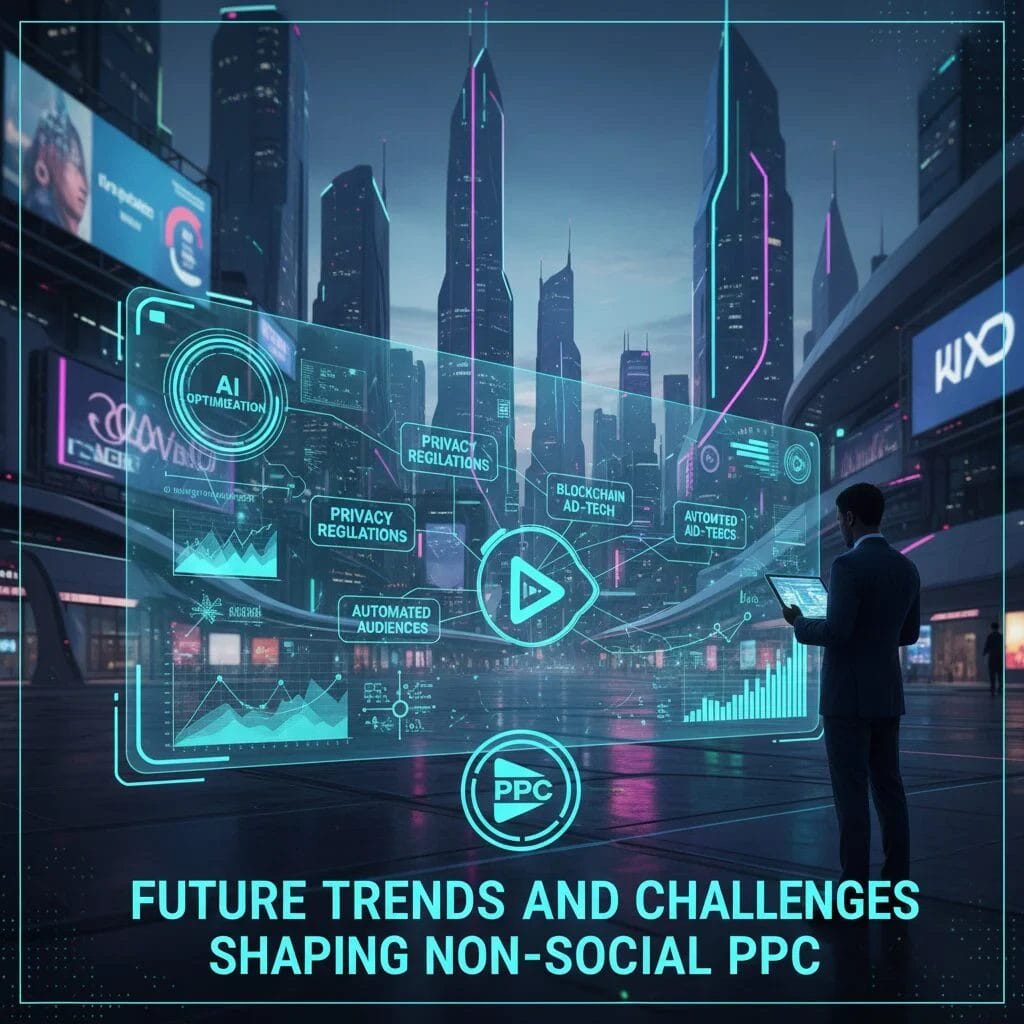
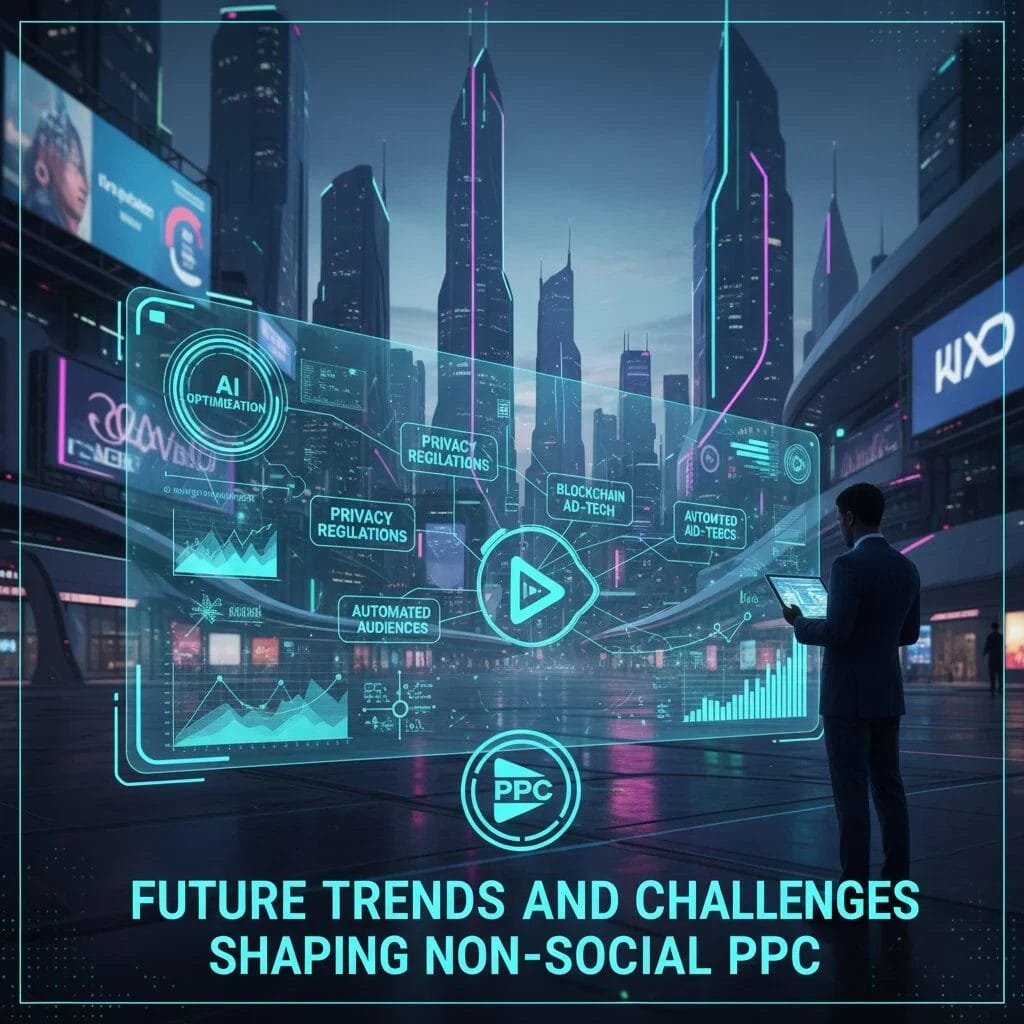
Future Trends and Challenges Shaping Non-Social PPC
AI Altering Campaign Management and Asset Generation
Artificial Intelligence now drives the creation of ad copy, images, and video assets. Generative AI tools enable advertisers to generate hundreds of creative variations instantly and test them to find the best performers. This shift reduces the manual burden of production but increases the need for strategic direction. The role of the PPC manager evolves from execution to orchestration, guiding the AI to align with brand voice and business goals.
Impact of Third-Party Cookie Deprecation on Tracking
The removal of third-party cookies disrupts traditional tracking and retargeting methods. Privacy Sandbox initiatives fill this gap by grouping users into cohorts rather than tracking individuals. Advertisers must adapt by implementing server-side tracking and relying heavily on first-party data. These privacy sandbox initiatives require new methods for gathering user data, forcing a pivot toward consent-based marketing and modeled conversions.
Diversifying Spend with Retail Media Networks (RMNs)
Retail Media Networks allow brands to advertise on retailer websites like Walmart, Target, and Tesco. This sector is exploding because it uses real purchase data for targeting. Reports indicate that retail media networks are projected to grow to $86.89 billion by 2034, with significant acceleration in 2026. Advertisers are shifting budget here to capture consumers who are already in a shopping mindset, bypassing the search engine entirely.
Role of Voice Search in Future Keyword Strategies
As voice-activated devices proliferate, search queries become longer and more conversational. Users ask specific questions rather than typing short keywords. Strategies must adapt by targeting long-tail question phrases (e.g., “What is the best coffee maker for small kitchens?”) rather than generic terms. This trend favors natural language processing and requires ad copy that provides direct, spoken-style answers to user queries.
My Answers to Your Questions
Is PPC dead in 2026?
No, PPC is evolving, not dying. While automation handles the mechanics, the need for strategic input is higher than ever.
Does SEO replace the need for PPC?
No. SEO and PPC serve different functions. PPC captures immediate demand, while SEO builds long-term authority.
Why is my CPC increasing?
Increased competition and inflation in digital markets drive costs up. Improving Quality Score is the best defence.
Can I run PPC without a website?
Technically, yes (e.g., Call-only ads), but a high-quality landing page is mandatory for conversion and Quality Score.
How much should I spend on PPC?
Budget depends on your goals and CPA. Start small, validate the ROI, and scale based on performance data.

Meet the UK’s Digital Storyteller: Journalist & SEO Developer
Did you know that websites with well-optimised SEO receive approximately 1,000% more traffic than those without proper optimisation? This striking statistic shows why having someone who understands both compelling content creation and technical SEO is so valuable.
I blend journalism and web development to create digital experiences that connect with people and rank well on search engines. After years of writing for leading UK publications, I noticed how technical limitations often held back great content from reaching its audience. So I taught myself web development, specializing in SEO-focused sites that don’t just look good but actually get found. When I’m not coding or writing, you’ll find me exploring London’s hidden coffee shops with my dog, testing new ideas on my personal blog, or speaking at industry events about the intersection of content and code.
Need someone who speaks both “journalist” and “developer” fluently? Let’s talk about how we can make your digital presence more visible and valuable.

