

Control, Comfort, and Proof
Consumers in 2026 demand agency, honesty, and immediate value, rejecting vague promises in favour of concrete proof. Google’s Top Digital Marketing Trends for 2026 report identifies a massive behavioural pivot: a “Human Correction” where present wellbeing overrides long-term goals, AI turns search into a two-way conversation, and trust must be earned through tangible evidence rather than empty virtue signalling.
People Prioritise Present Wellbeing Over Future Promises
Society has grown tired of “someday” messaging. Confronted with economic volatility and global uncertainty, the concept of Present Wellbeing has taken hold. Because long-term stability feels increasingly out of reach for many, people now prioritise immediate relief and joy over distant rewards. Marketing strategies that rely on a “grand finale” payoff are losing traction. Successful brands now engage users by offering smaller, frequent wins that validate their progress in real-time.
This psychological pivot forces a complete redesign of traditional loyalty. Programs that require years of investment to yield results are being abandoned in favour of models that celebrate intermediate milestones. A clear example of this is the British Airways Executive Club overhaul. The airline restructured its system to reward members with more milestone bonuses and new ways to earn status, ensuring that customers feel momentum with every flight rather than just at the end of the year.
- The Societal Shift: Anxiety drives a need for “right now” relief.
- The Marketing Response: Deconstruct value propositions into micro-wins and “pockets of joy.”
- The Outcome: Loyalty becomes an emotional connection based on daily progress rather than a transactional obligation.
AI Transforms Search into a Creative Conversation
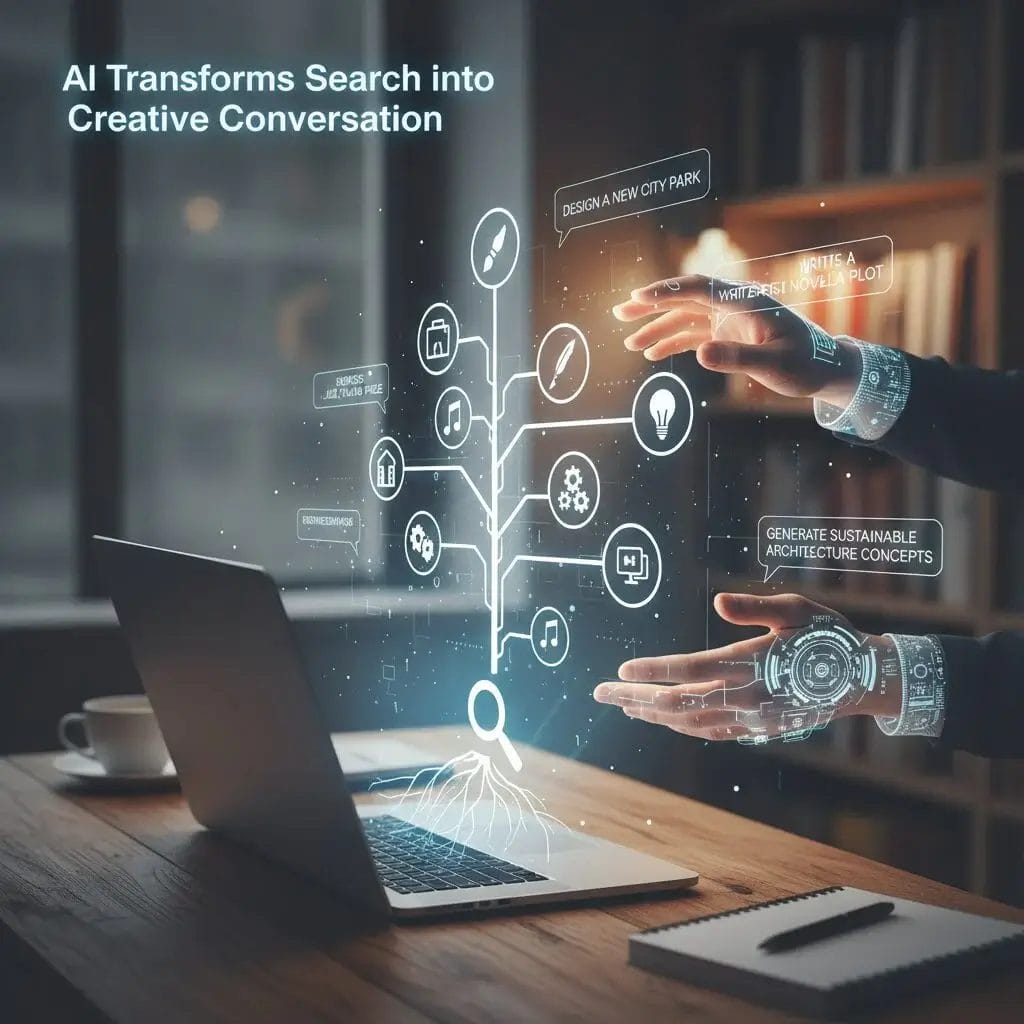
Search is no longer a static index; it is a dynamic dialogue. AI Mode represents the evolution of information retrieval, where users explore topics through a continuous back-and-forth exchange using text, voice, and visuals. This trend moves beyond simple fact-finding to “outsourced thinking,” where AI assists with complex decisions like travel planning or creative brainstorming.
Google’s data suggests that AI transforms consumer behaviour by shifting from lookup to dynamic exploration, making the search bar a creative interface. However, this convenience brings a “trust tension.” Users are learning to navigate AI hallucinations, meaning brands must position themselves as the verified “source of truth” within these AI-generated answers.
From SEO to GEO (Generative Engine Optimisation)
The transition from traditional SEO to Generative Engine Optimisation (GEO) is the primary technical hurdle for 2026. You must demonstrate Experience, Expertise, Authoritativeness, and Trustworthiness (E-E-A-T) rather than simply matching keywords. Systems now prioritise content that creates a rich ecosystem of authoritative facts that AI models can easily parse.
On the advertising front, Google describes AI Max for Search as a one-click upgrade that allows brands to reach consumers beyond manually selected keywords. This tool helps ads appear within dynamic AI experiences, ensuring your message connects when users are in discovery mode.
- Query Depth: Users ask follow-up questions, requiring content that anticipates the “next” need.
- Multimodal Input: Search volume for visual and voice queries will rise, requiring images with descriptive alt text that serve as standalone answers.
- Verification: Brand authority will depend on citing sources that AI models recognise as credible.
The Remix Economy and the Demand for Participation
Younger generations have killed the “read-only” internet. For Gen Z and Alpha, identity is built in public through participation. The Remix Economy dictates that brands are no longer sacred entities to be watched; they are raw materials to be edited, mashed up, and reinterpreted.
This trend is driven by a desire for agency. Gen Z is blurring the line between creator and audience, often trusting fan-made content more than official brand communications. Marketing in 2026 requires surrendering some control, allowing audiences to co-opt brand assets for their own storytelling. You can observe this scale on YouTube, where Roblox related videos have surpassed 1 trillion views, representing culture at an industrial volume. When your audience is already producing fan edits, reaction videos, and spin-off lore, a brand that refuses to “share the pen” quickly becomes invisible.
The Nostalgic Remix
Nostalgia has evolved from a warm feeling into a strategic tool for stability. Google frames 2026 as the era of the “nostalgic remix,” where brands succeed by utilising familiar cultural memory but rebuilding it into something new.
The genius lies in the “remix” angle. Consumers do not want static museums; they want reboots they can participate in. A prime example is Louis Vuitton’s re-edition collaboration with Takashi Murakami, which repackaged old magic as a fresh, modern moment. Research consistently links nostalgia advertising to stronger brand attitudes and consumer preference, suggesting that when the future feels noisy, people reach for cultural anchors to prove they belong.
Sustainability Demands Tangible Proof

The era of greenwashing is dead. Regulators and cynical consumers have dismantled the effectiveness of vague eco-friendly claims. Tangible Sustainability is the new standard, where “virtue signalling” is replaced by measurable product benefits.
Regulators are tightening the screws to enforce this shift. The European Commission explicitly frames its rules on green claims as a response to misleading information and low consumer trust. In the UK, the Advertising Standards Authority (ASA) has upheld rulings against fashion brands for unqualified sustainability language in paid search ads. The ASA bans on Superdry and Nike ads serve as a stark warning: absolute terms like “sustainable” now require rigorous, full-lifecycle evidence.
Marketing messages must now focus on specific, verifiable impacts such as durability, repairability, or energy efficiency. Data confirms that the future of sustainability lies in tangible value. Brands that succeed will treat sustainability as a product feature with hard evidence-using 40% less water, or sourced from 100% recycled inputs, rather than a brand halo.
My Answers to your Questions
What is the primary driver of the 2026 marketing trends?
A desire for control and agency drives these trends. Consumers feel overwhelmed by global uncertainty, leading them to value Present Wellbeing and tangible proof over abstract promises. This “Human Correction” prioritises immediate relief and participatory experiences over passive consumption.
How does AI change SEO in 2026?
AI shifts SEO from keyword matching to “Generative Engine Optimization” (GEO). You must structure content to answer conversational, multi-part queries, ensuring your brand appears as the cited authority within AI-generated summaries. Gartner predicts that traditional search volume will drop as people rely more on these conversational agents.
Why is brand loyalty changing?
Traditional points-based systems feel too slow. People want intermediate milestones that offer a tangible sense of progress, making the reward cycle feel immediate and emotionally satisfying.
What is the “Remix Economy” and Creative Participation?
It is a cultural shift where users expect to participate in a brand’s story. Instead of just consuming ads, audiences use brand assets to create their own content. Data from YouTube’s Culture and Trends Report confirms that digital franchises and fan participation drive global trends, making active community involvement a stronger growth engine than passive broadcasting.
What is the ‘Nostalgic Remix’?
It is a strategy where brands allow consumers to reimagine or “remix” classic intellectual property. It combines the comfort of the past with the creative tools of the present. Google reports that nostalgic ad campaigns are proven to increase brand likability significantly by anchoring users in familiar emotional territory.
How should brands approach sustainability now?
Stop making vague claims. Focus on Entity Certainty by providing specific data points. Marketing must focus on specific, verifiable attributes-such as energy efficiency or material sourcing-rather than broad ethical posturing to avoid legal risk and consumer skepticism.

Meet the UK’s Digital Storyteller: Journalist & SEO Developer
Did you know that websites with well-optimised SEO receive approximately 1,000% more traffic than those without proper optimisation? This striking statistic shows why having someone who understands both compelling content creation and technical SEO is so valuable.
I blend journalism and web development to create digital experiences that connect with people and rank well on search engines. After years of writing for leading UK publications, I noticed how technical limitations often held back great content from reaching its audience. So I taught myself web development, specializing in SEO-focused sites that don’t just look good but actually get found. When I’m not coding or writing, you’ll find me exploring London’s hidden coffee shops with my dog, testing new ideas on my personal blog, or speaking at industry events about the intersection of content and code.
Need someone who speaks both “journalist” and “developer” fluently? Let’s talk about how we can make your digital presence more visible and valuable.

